Rainwater collection for irrigation & livestock
One of the simplest upgrades on any small farm or homestead — catching what falls from the sky and putting it to work. Here's why it matters and how to get started. How it works — the basic system
Catchment surface. Your barn, shop, or house roof is your collector. Metal roofing is ideal — it sheds water cleanly and doesn't introduce contaminants. A 1,000 sq ft roof captures roughly 600 gallons from just one inch of rain.
Gutters & downspouts. Standard gutters channel water to your collection point. Keep them clear of debris — a first-flush diverter is a smart add-on that dumps the first few gallons (which carry the most dust and bird droppings) before filling your tank.
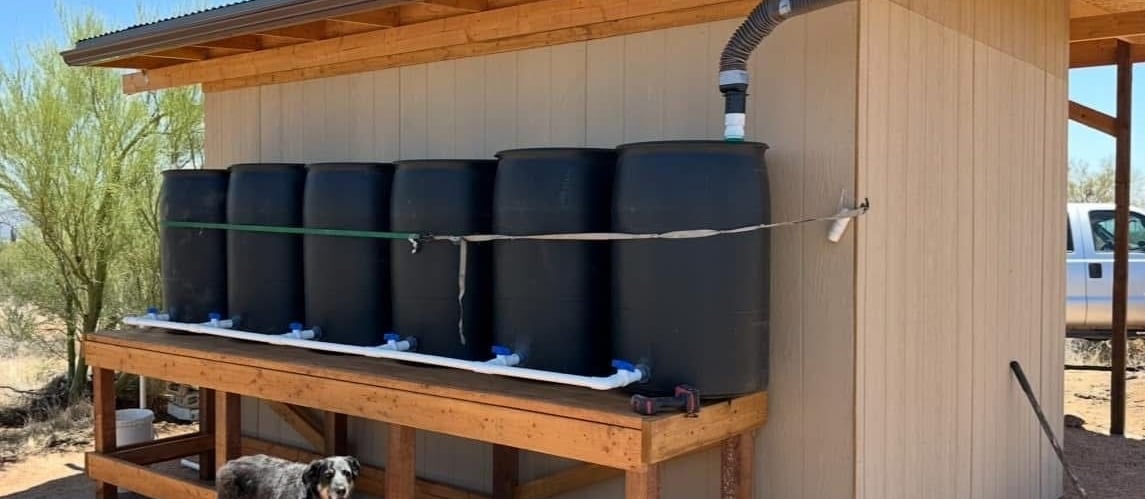
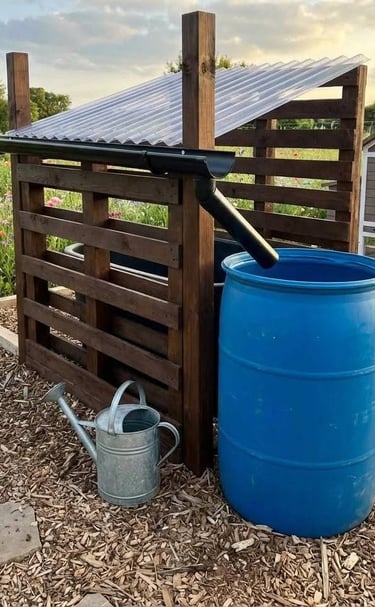
Storage tank. Rain barrels (50–100 gal) work for small gardens. For irrigation or livestock you'll want a 500–5,000 gallon poly tank or IBC tote. Bury a cistern for maximum capacity and to keep water cool and algae-free.
Distribution. Elevate your tank for gravity-fed pressure or add a 12V pump for longer runs. Drip tape to beds, a hose bib to a trough, or both — the setup scales to whatever your operation needs.
Overflow & maintenance. Direct overflow away from foundations. Clean screens and inspect tanks seasonally. For livestock water, test annually and consider a UV filter or stock-safe treatment if animals are drinking directly from storage.
Check your local regs first. Most states fully allow rainwater collection — some even offer rebates. A handful have restrictions on quantity or use. A quick call to your county extension office will tell you exactly where you stand before you buy any hardware.
Our Services
Gallery
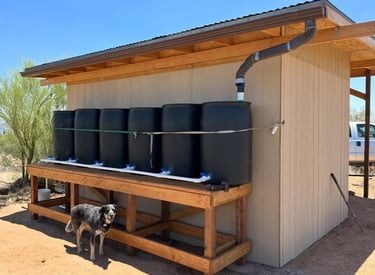
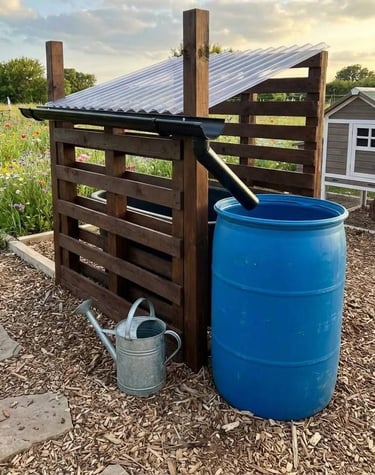
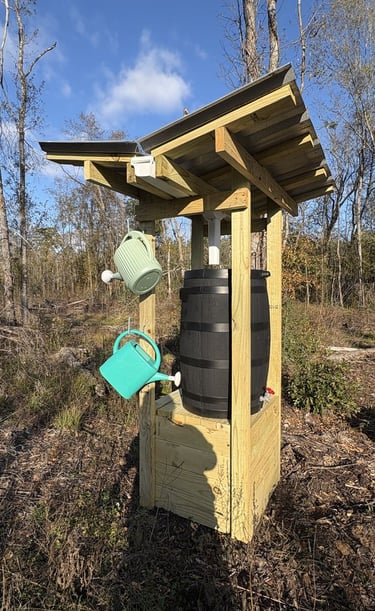
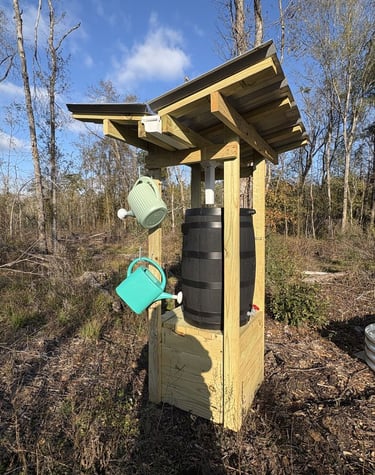
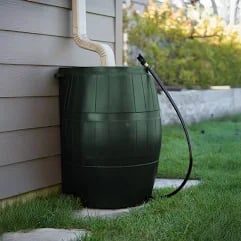
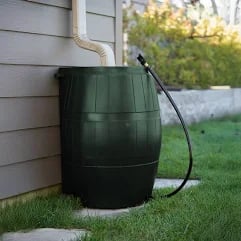
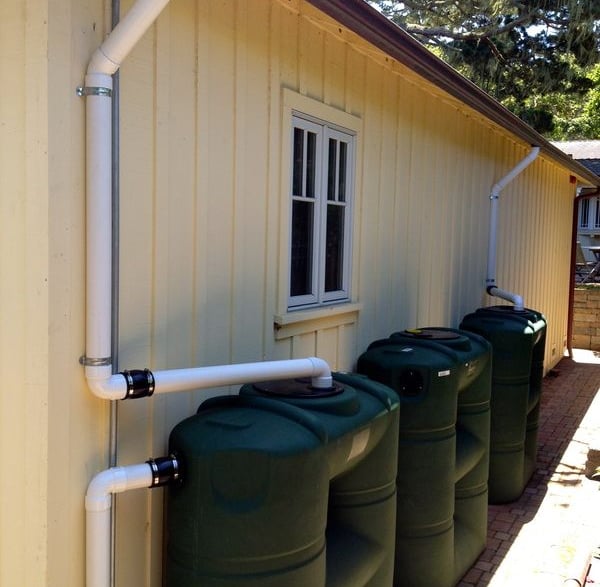
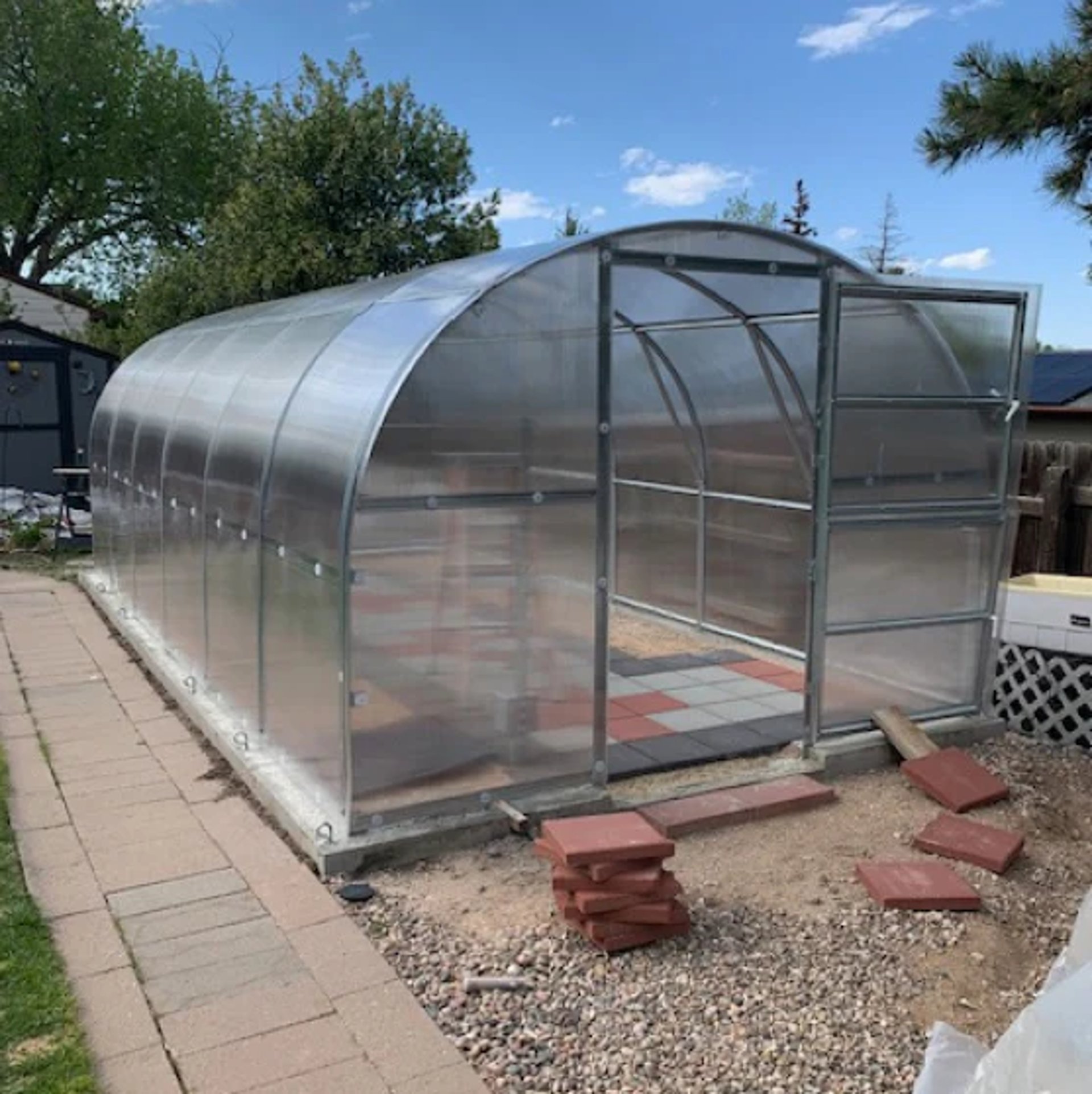
Here are a few different types of rainwater systems.


Get in Touch
Reach out with any questions or installation information.
Explore our sleek website template for seamless navigation.
Contact
Newsletter
Wayne@backyardag.com
316-347-1068
© 2024. All rights reserved.